You Won’t Believe What I Found Driving Through Savannah’s Cityscape
Driving into Savannah feels like stepping into a living postcard—moss-draped oaks, cobblestone squares, and pastel antebellum homes lining quiet streets. I hit the road with no agenda, just a full tank and curiosity. What unfolded was a cityscape of surprising contrasts: historic charm meets modern rhythm, all best explored at your own pace. Self-driving let me uncover hidden corners and iconic views few tourists see. This is Savannah, seen from the driver’s seat—raw, real, and totally unforgettable.
The Open Road to Savannah: Why Self-Driving Changes Everything
Arriving in Savannah by car offers a freedom that no guided tour or shuttle service can replicate. There’s a quiet thrill in crossing the city limits at your own rhythm, windows down, the scent of salt and magnolia drifting through the cabin. Unlike cities where parking is a nightmare and public transit is essential, Savannah rewards the independent traveler who chooses to drive. The city’s layout—compact yet expansive, historic yet accessible—makes it uniquely suited to self-guided exploration. With a car, you are no longer bound by schedules or itineraries. You can linger in a sunlit square, detour down a tree-lined lane with no name, or pause at a corner bakery without worrying about missing a bus.
Driving allows access to neighborhoods that lie just beyond the tourist maps. While most visitors cluster around River Street and the central squares, those with a vehicle can glide into areas like Ardsley Park or the Victorian District, where century-old homes sit behind iron gates and gardens bloom year-round. These neighborhoods reveal a different side of Savannah—one lived in, cherished, and shaped by generations. Without a car, these pockets remain glimpsed only from a distance, if at all. The flexibility of self-driving transforms a simple visit into a personal journey, where discovery is not measured in checklists but in moments of quiet awe.
Practical advantages further elevate the driving experience. Major highways like I-16 lead directly into the city, with clear signage guiding visitors toward downtown and key districts. Parking, while limited in the busiest zones, is manageable with a bit of planning. Public garages, metered street spots, and designated visitor lots offer reliable options. Moreover, driving eliminates the stress of coordinating rides or navigating unfamiliar transit systems, especially for travelers with luggage or families with young children. The car becomes both transport and sanctuary—a place to retreat, regroup, and prepare for the next leg of exploration.
First Impressions: Entering the Cityscape
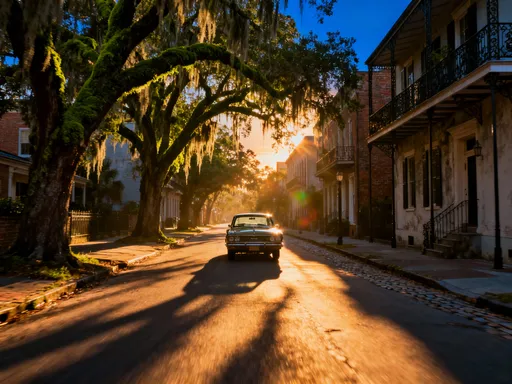
The transition into Savannah is as much a sensory experience as a physical one. As the open highway gives way to tree-lined boulevards, the city reveals itself gradually, like a story unfolding in layers. The first sign is often the canopy—live oaks stretching across the road, their branches heavy with Spanish moss, filtering the sunlight into soft, dappled patterns on the pavement. Then comes the silence, not of emptiness, but of reverence. The hush of tree-shaded streets seems to invite reflection, slowing both traffic and thought.
One of the most striking first views is Forsyth Park’s iconic fountain, rising in the distance like a promise. Seen from the car, it appears almost dreamlike—a marble centerpiece in a vast green expanse, surrounded by walking paths and shaded benches. Approaching it by vehicle allows you to appreciate its scale and setting before even stepping out. Similarly, the skyline, dotted with church spires and historic rooftops, emerges subtly, never imposing but always present. These are not sights designed for quick snapshots from a tour bus window; they are meant to be absorbed slowly, from the seat of a moving car.
Driving into Savannah also means experiencing the city’s rhythm before engaging with its sights. You notice the way residents move—joggers on Abercorn Street, cyclists near Lafayette Square, shopkeepers arranging flowers outside boutiques. You hear the distant chime of a church bell or the soft hum of a street performer’s guitar. These details, fleeting and unscripted, form the true introduction to Savannah. They are the city breathing, living, and welcoming you—not as a guest on a schedule, but as a temporary resident soaking in the moment.
Historic District at Ground Level: A Driver’s Perspective
Navigating Savannah’s Historic District by car offers a unique vantage point—one that balances movement with intimacy. The district, laid out in a grid of 22 historic squares, is best understood not from a map, but from the driver’s seat. Each square serves as a green anchor, a pause in the urban fabric, and driving from one to the next reveals subtle shifts in character. Monterey Square, with its grand mansions and the haunting beauty of the Mercer-Williams House, feels more formal, almost regal. Chippewa Square, home to the statue of General James Oglethorpe, pulses with a livelier energy, especially in the late afternoon when visitors gather on benches.
The street layout, while charming, requires some adaptation. One-way streets, narrow lanes, and pedestrian-heavy zones mean that driving here is not about speed, but about awareness. Yet this slowness is part of the appeal. It forces you to pay attention—to the wrought-iron balconies, the pastel facades, the hidden courtyards glimpsed through open gates. A car allows you to appreciate the architectural continuity of the district, how each block tells a story of preservation and pride. You begin to notice patterns: the recurrence of fanlights above doors, the use of tabby construction in older walls, the way gaslit streetlamps cast a warm glow at dusk.
Parking near the busiest squares can be challenging, but it’s rarely impossible with planning. The city provides several public parking garages within walking distance of major attractions, and metered spots are available on side streets. The key is to treat the car as a tool, not a burden—park strategically, then explore on foot for an hour or two before returning to move on. This rhythm—drive, park, wander, return—creates a natural flow to the day, allowing for both discovery and rest. And unlike crowded trolleys or walking tours that rush from point to point, driving lets you absorb the city at its own pace, pausing where the light hits just right or where a garden spills over a low brick wall.
Beyond the Postcard: Hidden Neighborhoods Only Drivers Discover
While the Historic District captures most of Savannah’s spotlight, the neighborhoods just beyond its edges hold some of the city’s most authentic charm—and they are accessible primarily by car. Ardsley Park, developed in the early 20th century, is a residential gem where tree-lined avenues form a canopy over quiet streets. Homes here range from Craftsman bungalows to Tudor Revival houses, each with meticulously kept lawns and flowering shrubs. Driving through feels like stepping into a well-preserved era, where life moves at a gentler pace.
Similarly, the Victorian District, centered around Gwinnett Street, showcases an array of ornate homes with gingerbread trim, stained glass, and wraparound porches. These streets are not designed for foot traffic alone; they are meant to be seen in motion, where the full sweep of architectural detail reveals itself over distance. Without a car, these areas remain largely invisible to tourists, accessible only through organized tours or long walks. But for those driving, they offer a chance to witness Savannah as it is lived—a city of neighborhoods, not just monuments.
Another hidden treasure is Habersham Manor, a planned community that blends Southern elegance with modern comfort. Though newer than the historic core, it respects Savannah’s aesthetic with wide streets, live oaks, and homes that echo traditional design. Driving here at sunset, when the golden light catches the columns and shutters, feels like witnessing a private moment in the city’s ongoing story. These neighborhoods also reveal local life—the corner diner where residents gather for coffee, the community garden tended by volunteers, the murals painted on the sides of garages. They are not curated for visitors, but they are welcoming all the same.
The ability to make spontaneous detours is one of the greatest gifts of self-driving. You might follow a street simply because the trees arch beautifully overhead, or stop to photograph a garden bursting with azaleas in spring. These unplanned moments often become the most memorable—proof that true discovery happens not on a schedule, but in the quiet spaces between destinations.
Sunrise to Sunset: Chasing Light and Views by Car
Savannah’s beauty shifts with the light, and having a car allows you to follow it. At dawn, the city is hushed, almost sacred. Driving into Forsyth Park early in the morning, when mist rises from the fountain and joggers are the only movement, feels like witnessing a private ritual. The light is soft, silver-blue, turning the Spanish moss into delicate lace. This is a side of Savannah few tourists see, reserved for those willing to rise early and explore before the crowds arrive.
By mid-morning, the city warms into focus. Sunlight slants across the squares, illuminating the details of stonework and ironwork. Factors Walk along River Street, usually bustling, takes on a quieter tone when seen from above—driving along E. River Street offers panoramic views of the cobblestone path below, the Savannah River shimmering in the distance. This is the time for slow drives through the district, windows down, camera ready for unexpected compositions: a cat sleeping on a windowsill, a flower box overflowing with petunias, a street artist setting up his easel.
Golden hour, just before sunset, is when Savannah truly glows. Drives along Bull Street or Drayton Street during this time feel cinematic. The low sun catches the facades of antebellum homes, turning brick into amber and white columns into gold. Forsyth Park, bathed in warm light, becomes a photographer’s dream. Even a simple loop around Monterey Square at this hour reveals new textures—the way shadows stretch across lawns, the way light filters through live oaks onto wrought-iron fences. These moments are fleeting, lasting only minutes, but with a car, you can chase them, moving from one perfect vantage point to the next.
And then there is the night. Savannah after dark is not loud, but luminous. Gaslit streets cast a soft, romantic glow, and the squares, now quieter, take on a dreamlike quality. Driving through at night—windows up against the mild evening air, music low—feels like moving through a living painting. The city’s beauty doesn’t disappear when the sun sets; it transforms. And again, only those with a car can experience this shift fully, moving from the quiet elegance of residential lanes to the gentle buzz of Broughton Street’s restaurants.
Practical Tips for a Smooth Savannah Drive
While Savannah is welcoming to drivers, a few practical considerations ensure a seamless experience. For those arriving from the north or west, I-16 is the main artery into the city. Exiting at Montgomery Street or Price Street places you near the edge of the Historic District, with clear access to parking and major landmarks. GPS is helpful, but it’s wise to have a basic understanding of the city’s grid. The squares are laid out in a predictable pattern, and knowing a few key cross streets—like Bay, Congress, or Gordon—can prevent unnecessary detours.
Parking is manageable but requires strategy. In the core tourist areas, public garages such as the one on West St. Julian Street or the Whitaker Street garage offer secure, convenient options. Metered parking is available on many side streets, with rates typically enforced from 9 a.m. to 6 p.m. Residential areas have signage indicating permit-only zones, so it’s important to observe posted rules. For longer visits, consider parking once and using a combination of walking and rideshares for secondary destinations.
Fuel and refreshment stops are plentiful but worth planning. Gas stations are located on major thoroughfares like Victory Drive and Oglethorpe Avenue, outside the densest parts of downtown. For coffee or a snack, independent cafes like Collins Quarter or Foxy Loxy Co. offer local flavor and outdoor seating—perfect for a mid-drive pause. Scenic pull-offs, though limited, can be found near Forsyth Park and along the riverfront, where you can step out, stretch, and take in the view.
Seasonal factors also play a role. Summers in Savannah are hot and humid, so early morning or late afternoon drives are more comfortable. Keep water in the car and use sunshades if parking for extended periods. Spring and fall offer the most pleasant conditions, with mild temperatures and seasonal blooms—azaleas in spring, live oaks in full canopy in fall. Winter visits are quieter, with fewer tourists and easier parking, though some outdoor attractions may have reduced hours.
Why Savannah’s Soul is Best Felt Behind the Wheel
In the end, driving through Savannah is about more than convenience—it’s about connection. The car becomes a bridge between observer and participant, allowing you to move through the city not as a passive guest, but as an engaged traveler. You begin to understand Savannah’s rhythm: the way light changes over the squares, the way neighborhoods breathe differently, the way history is not just preserved but lived.
This kind of intimacy is difficult to achieve on foot or from a tour bus. Walking limits your range; tours dictate your pace. But driving offers balance—speed when needed, stillness when desired. It allows you to return to a favorite square at different times of day, to notice how the same fountain looks in morning mist versus golden hour, to see how residents interact with their spaces as the day unfolds.
Savannah is a city of layers, and self-driving peels them back one mile at a time. It reveals not just the postcard views, but the quiet courtyards, the neighborhood bakeries, the streets where children ride bikes and neighbors wave from porches. These are the moments that linger—the unscripted, unhurried glimpses of a city that feels both timeless and alive.
So the next time you plan a visit, consider arriving with keys in hand. Let the open road lead you not just to Savannah, but into its heart. Because the true cityscape—its soul, its silence, its surprise—is best discovered one turn at a time, from the driver’s seat.