You Won’t Believe This Food Journey Through Hue’s Wild Landscapes
Hue isn’t just ancient emperors and royal tombs—it’s riverside markets, misty mountains, and flavors that hit different. I went searching for real Vietnamese food, and ended up hiking through rice fields, kayaking to hidden villages, and eating banh khoai where the ingredients come straight from the earth. The landscape shapes every bite. This is travel that feeds your stomach and your soul. Trust me—you’ve never tasted Vietnam like this.
The Heartbeat of Central Vietnam
Hue sits at the soul of central Vietnam, where the lush Annamite Range slopes down to meet the fertile banks of the Perfume River. This convergence of mountain and delta is not just a geographic detail—it’s the foundation of a unique way of life. The river, winding gently through emerald rice paddies and quiet villages, is more than a scenic backdrop. It’s a lifeline. Farmers rely on its seasonal rhythms to plant and harvest, while fishermen pull silver carp and catfish from its calm waters each morning. The mist that rises at dawn, curling over wooden boats and lotus ponds, is not just poetic—it’s part of the climate that nurtures the region’s distinct agriculture.
The city’s royal past is well-documented, with grand tombs and the Imperial Citadel drawing visitors from around the world. But beyond these monuments lies a quieter, more enduring legacy: the daily rhythm of people living in harmony with their environment. In villages like Thuy Bieu and Phu An, life unfolds along narrow footpaths between orchards and paddy fields. Women in conical hats bend over flooded fields, planting rice by hand just as their ancestors did. Smoke drifts from roadside stalls where skewers of marinated pork sizzle over charcoal. This is where tradition isn’t preserved behind glass—it’s lived, breathed, and eaten.
What makes Hue’s food culture so special is its deep connection to this land. The soil, the water, the altitude—all shape the ingredients that define the region’s cuisine. Turmeric grows thick in the red earth, its roots knobby and richly colored. Banana trees line riverbanks, their broad leaves later used to wrap sticky rice or line steaming baskets. Mountain herbs like ngai bung and rau ram flourish in the cool highlands, adding sharp, peppery notes to salads and soups. Even the air carries flavor—humid and fragrant with jasmine and woodsmoke. Every element of Hue’s landscape contributes to a culinary identity that is bold, earthy, and deeply rooted.
Flavors Rooted in the Land
If the land shapes the ingredients, it also shapes the character of the food. Hue’s cuisine is famously bold—spicy, aromatic, and layered with umami. Unlike the lighter dishes of the north or the sweet, coconut-heavy fare of the south, central Vietnamese food reflects a history of scarcity and resilience. The region’s narrow coastal strip has limited arable land, and historically, food preservation was essential. This gave rise to powerful flavors: fermented fish sauce, fiery chilies, and pungent herbs that could stretch a small amount of protein into a satisfying meal.
No dish captures this better than bun bo Hue, the region’s iconic beef and pork noodle soup. A steaming bowl is a revelation—deep red from chili oil, fragrant with lemongrass, and layered with tender slices of beef, pork knuckle, and congealed pig blood (a traditional addition that adds richness). The broth simmers for hours, often overnight, drawing flavor from marrow bones and spiced with shrimp paste and fermented tofu. It’s not just a meal; it’s a testament to patience and resourcefulness. One family-run stall near Dong Ba Market, run by three generations of women, starts their broth at midnight. The fire burns low, fed by scraps of local wood, and the scent fills the alley by dawn.
The intensity of Hue’s food isn’t just about heat—it’s about balance. A spicy bowl of bun bo is always served with a mountain of fresh herbs: sawtooth herb, perilla, bean sprouts, and lime wedges. These bright, cooling elements cut through the richness, creating a harmony that reflects the landscape itself—fiery sun, cool mountain breezes, and the constant flow of the river. Even desserts carry this duality. Che hue, a sweet mung bean and tapioca pudding, is served warm or cold, often topped with coconut cream and a sprinkle of crushed peanuts. It’s simple, comforting, and deeply satisfying—like the land that produced it.
Journey to the Source: From Farm to Wok
To understand Hue’s cuisine, you have to leave the city. A short drive northeast takes you to Thuy Bieu, a village nestled among orchards and smallholdings where families grow turmeric, ginger, lemongrass, and banana leaves. These aren’t commercial farms with tractors and irrigation systems. They’re family plots, often just a few hundred square meters, worked by hand. The soil is dark and rich, turned with hoes rather than machines. Here, sustainability isn’t a trend—it’s survival.
Visitors can join guided tours that begin with a walk through the garden, where a farmer might hand you a freshly pulled turmeric root, its orange flesh staining your fingers. You’ll learn how ginger is harvested in cycles, how banana leaves are selected for wrapping, and why certain herbs are planted near rice fields to repel insects. Then comes the best part: using what you’ve picked to prepare a meal. Under the shade of a thatched roof, guests help wrap banh trang rolls—rice paper filled with herbs, grilled pork, and crushed peanuts, served with a tangy peanut dipping sauce. The ingredients have traveled less than fifty meters from soil to plate.
This immediacy transforms the eating experience. A leaf of mint, plucked and eaten seconds after harvest, tastes electric—sharper, sweeter, more alive than anything from a supermarket. It’s a reminder that flavor isn’t just about cooking technique; it’s about timing, freshness, and connection. One woman, a grandmother who has lived in Thuy Bieu her entire life, says, “When you grow your food, you respect it. You don’t waste. You taste everything.” Her words linger long after the meal ends.
River Markets and Floating Kitchens
The Perfume River is more than a source of irrigation—it’s a highway of flavor. Each morning, before the sun fully clears the hills, small wooden boats gather at floating markets like Tan Trao and Tra Le. Vendors in wide-brimmed hats trade baskets of rambutan, dragon fruit, and longan, alongside bundles of water spinach and lotus stems. Freshwater eel, still wriggling, is passed from boat to boat. These markets are not tourist attractions; they’re working hubs where villagers buy and sell the day’s harvest.
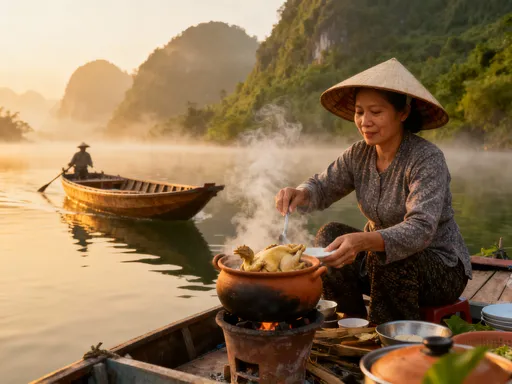
Tourists can join early boat trips to experience this world firsthand. Gliding through the mist on a wooden sampan, you’ll see life unfolding along the banks: children washing clothes, men mending nets, women loading fruit onto rickety bicycles. At one stop, a vendor serves com hen—mussel rice—from a clay pot balanced on a charcoal stove. The dish is humble but unforgettable: sticky rice topped with tiny river mussels, fried shallots, and a splash of fish sauce. It’s eaten with chopsticks and a spoon, right there on the boat, the river lapping at the hull.
Water-based cuisine in Hue is lighter than its inland counterparts, designed for the humid climate. Dishes like canh chua ca (sour fish soup) feature tamarind, pineapple, and okra, creating a bright, tangy broth that refreshes rather than overwhelms. Another favorite is banh canh cua, a thick noodle soup made with crab and tapioca flour, its chewy texture contrasting with the delicate sweetness of the shellfish. These meals are often cooked on floating kitchens—small boats equipped with stoves and storage—allowing vendors to serve food fresh, wherever the current takes them.
Mountain Eats: Food with a View
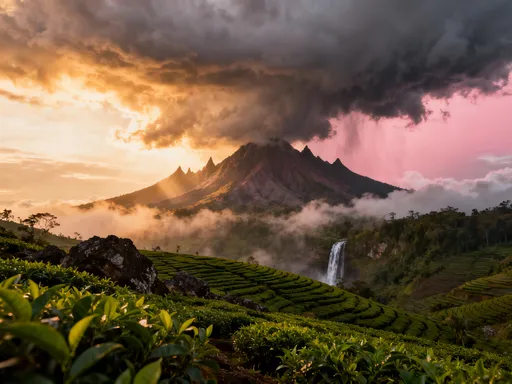
Just an hour’s drive west, the landscape shifts dramatically. The flat river delta gives way to the dense forests and rolling peaks of Bach Ma National Park. At over 1,400 meters, the air is cooler, the scent of pine and damp earth replacing the humidity of the lowlands. This change in elevation brings a different kind of cuisine—one built for warmth and energy.
Local hill tribes and forest rangers rely on food that can be cooked over open flames and eaten with bare hands. Grilled wild boar, marinated in lemongrass and chili, is a staple. The meat is lean and smoky, served with sticky rice cooked inside bamboo tubes. The bamboo imparts a subtle sweetness, while the rice absorbs the forest’s essence. Another specialty is rac, a herbal tea made from wild mint, ginger, and a local plant called lau dam. It’s served hot, often after a long trek, and warms you from the inside out.
Many visitors end their hikes with a picnic lunch prepared by a local guide. Imagine sitting on a rocky outcrop, overlooking a valley blanketed in green, as your guide pulls skewers of grilled meat from a portable grill. There’s no table, no plates—just food passed hand to hand, eaten slowly while the wind rustles the trees. One guide, a former soldier who now leads eco-tours, says, “In the mountains, food isn’t fancy. It’s fuel. But it’s also love. When I cook for guests, I’m sharing my home.” That sense of generosity turns a simple meal into something sacred.
Cooking Class with a View: Learn, Taste, Repeat
For those who want to take Hue’s flavors home, a full-day cooking class offers the perfect immersion. Held in a restored garden villa just outside the city, the experience begins at sunrise with a visit to a local market. Under the guidance of a chef who grew up in a Hue fishing village, you’ll learn to select the freshest ingredients: springy rice noodles, plump shrimp, and bunches of fragrant herbs. The chef explains how to tell if fish sauce is high quality—by its color, aroma, and salt balance—knowledge passed down through generations.
Back at the villa, set among paddy fields and lotus ponds, the real work begins. You’ll grind rice for banh beo, the delicate steamed rice cakes topped with dried shrimp and scallion oil. The batter is poured into tiny molds, steamed for seconds, and served immediately. Then comes banh khoai, the crispy pancakes that are Hue’s answer to the crepe. The batter—a mix of rice flour and turmeric—is ladled onto a hot griddle, then filled with shrimp, bean sprouts, and pork. The result is golden, crunchy, and deeply satisfying.
But the class isn’t just about technique. It’s about stories. The chef shares how her grandmother taught her to cook during wartime, when ingredients were scarce and every grain of rice mattered. She explains the symbolism behind certain dishes—how banh beo’s small size represents humility, how the yellow of banh khoai echoes the color of the royal court. By the end, you’re not just following a recipe—you’re carrying forward a tradition. And when you sit down to eat what you’ve made, surrounded by the sounds of birds and rustling rice stalks, the meal tastes different. It tastes like memory.
Why This Kind of Travel Changes You
Travel that centers on food and nature doesn’t just feed the body—it reshapes the way you see the world. In Hue, every meal is a lesson in connection. When you eat bun bo Hue beside the river where the herbs were picked, or share grilled boar with a guide who knows every trail in the forest, you’re not just consuming food. You’re participating in a story that spans generations. You begin to understand that flavor isn’t accidental. It’s shaped by soil, climate, history, and human care.
This kind of experience stands in contrast to mass tourism, where meals are often disconnected from their origins. In a hotel buffet, a dish might be delicious, but it lacks context. In Hue, when you taste something, you know where it came from. You’ve seen the field, met the farmer, felt the sun on your skin as you harvested. That awareness deepens the pleasure. It turns eating into an act of gratitude.
More than that, it fosters respect. You learn to value slowness, seasonality, and simplicity. You realize that the best ingredients don’t come from far away—they come from nearby, grown with care. And you begin to see your own kitchen differently. Back home, you might seek out local produce, try fermenting your own sauces, or simply take more time to prepare a meal. The journey changes your habits, your tastes, and even your values.
Hue offers a model for what travel can be: not just sightseeing, but sensory immersion. It invites you to slow down, to taste deeply, to listen to the land. In a world that often feels rushed and artificial, this kind of authenticity is rare—and deeply healing. It reminds us that we are part of a larger web, that food is more than fuel, and that the most meaningful experiences are often the simplest.
Hue proves that the best meals aren’t just served—they’re discovered. When you let nature guide your plate, every bite becomes a memory. This is Vietnamese food, unfiltered, alive, and unforgettable. Pack your bag, follow your taste buds, and let the land show you what real flavor feels like.