You Won’t Believe the Art Hidden in Machu Picchu’s Mountain Markets
Perched high in the Andes, Machu Picchu stuns with ancient stones and misty peaks—but few expect its vibrant art spaces. I was blown away by how creativity thrives beside history. From handwoven textiles to intricate carvings, local artisans pour soul into every piece. Shopping here isn’t just buying souvenirs—it’s taking home a story. This is more than tourism; it’s connection.
The Unexpected Heart of Andean Creativity
Nestled among cloud-kissed peaks and terraced ruins, Machu Picchu is celebrated for its architectural brilliance and spiritual aura. Yet beyond the stone temples and panoramic views lies a lesser-known treasure: the living artistry of the Andes. In the shadow of this UNESCO World Heritage site, creativity pulses through bustling market stalls, quiet village workshops, and winding mountain paths where Quechua artisans display generations of cultural knowledge. These artists transform wool, clay, wood, and stone into expressions of identity, memory, and resilience—works that are not merely decorative but deeply symbolic.
The art found near Machu Picchu challenges the common perception of tourism as passive observation. Instead, it invites engagement, dialogue, and emotional resonance. While many visitors come expecting only archaeological wonder, they often leave carrying far more—a textile dyed with natural pigments, a ceramic vessel shaped by ancestral hands, or a carved gourd etched with cosmological patterns. These objects carry the quiet power of continuity, linking past and present through craft. In places like Aguas Calientes and surrounding highland communities, markets have evolved into cultural sanctuaries where tradition meets contemporary expression.
What makes these artistic spaces so significant is their role in cultural preservation. For the Quechua people, art is not separate from daily life or spiritual practice; it is interwoven with both. Each pattern, color, and material holds meaning—often tied to the land, celestial movements, or community identity. By sustaining these traditions, artisans resist cultural erosion and assert their presence in a rapidly changing world. Their work stands as a quiet but powerful testament to Indigenous endurance, offering travelers not just beauty, but insight into a worldview shaped by harmony with nature and reverence for ancestry.
Where to Find Authentic Art Spaces Near Machu Picchu
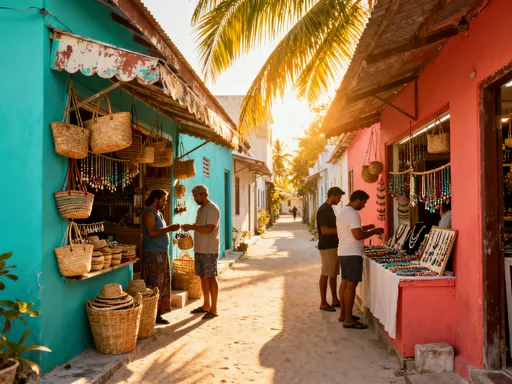
For travelers seeking genuine Andean artistry, location matters. The most authentic experiences are found not in generic souvenir shops, but in spaces rooted in local communities. The artisan market in Aguas Calientes, the gateway town to Machu Picchu, offers a starting point—but discernment is key. While some stalls sell mass-produced imports from outside Peru, others are run directly by Quechua families who bring their crafts down from nearby villages. These authentic vendors often display signs indicating cooperative membership or fair trade certification, signals of ethical production.
Further afield, community-run cooperatives in towns like Ollantaytambo and Pisac provide deeper access to traditional craftsmanship. These cooperatives, often supported by non-governmental organizations or cultural preservation groups, allow artisans to maintain control over their work and pricing. Visitors can tour weaving studios, watch potters at their wheels, or attend informal demonstrations of natural dyeing techniques. Such spaces prioritize education and cultural exchange, ensuring that tourism supports, rather than exploits, local creativity.
Timing also influences the quality of the experience. Early mornings, especially on market days, offer the best opportunity to meet artisans before crowds arrive. Weekdays tend to be less commercialized than weekends, when tourist demand spikes. Additionally, visiting during local festivals—such as Inti Raymi in June or Qoyllur Rit’i in May—provides rare access to ceremonial textiles and ritual objects not typically available for sale. These moments reveal art in its full cultural context, not as isolated commodities but as living elements of community life.
Respectful engagement begins with awareness. Observing quietly before purchasing, asking permission before photographing, and listening to explanations about symbolism demonstrate appreciation beyond transactional tourism. Simple gestures—like greeting in Quechua ("Allillanchu" means "Hello, how are you?") or thanking a weaver in her native language—can deepen connection and affirm the dignity of her craft.
Meet the Makers: Faces Behind the Textiles and Stone
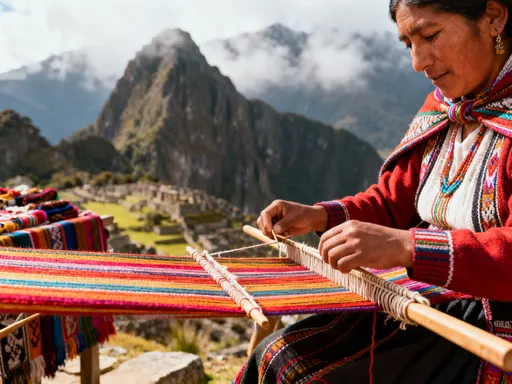
Behind every textile, carving, and ceramic piece is a story of lineage, labor, and love. The Quechua artisans who create these works are not anonymous producers but custodians of knowledge passed down through generations. Many come from families where weaving, pottery, or woodcarving has been practiced for centuries, learned not in schools but through daily immersion. A young girl might sit beside her grandmother, watching the rhythmic motion of the backstrap loom, absorbing patterns that encode her community’s history before she can read or write.
One such artisan, María Apasa from the village of Chinchero, describes weaving as “a language stitched in thread.” Her alpaca wool textiles feature geometric motifs representing mountains, rivers, and constellations—symbols that map both the physical and spiritual landscape. She uses natural dyes derived from cochineal insects, indigo plants, and mineral-rich clays, each hue carrying symbolic weight. Red signifies life force, yellow the sun, green the earth’s fertility. The process is slow and meticulous: a single shawl may take weeks to complete, with every knot tied by hand.
Similarly, stone carvers in the Sacred Valley continue pre-Columbian techniques using hand tools and locally quarried andesite. Their sculptures—often depicting condors, pumas, or Incan deities—are not mere replicas but original interpretations grounded in cosmology. A carver named Juan Quispe explains that he “listens to the stone” before shaping it, believing each block contains a spirit waiting to be revealed. This philosophy reflects a worldview in which humans and nature are in constant dialogue, where creation is an act of respect rather than domination.
These artisans do not see themselves as artists in the Western sense, but as weavers of memory. Their work preserves oral histories, ecological knowledge, and spiritual beliefs that might otherwise fade. When travelers purchase a piece, they are not merely acquiring an object—they are participating in a chain of cultural transmission that spans centuries.
What to Look for When Buying: Quality, Meaning, and Ethics
Purchasing art from the Andes is a privilege that comes with responsibility. With increasing tourism, the market has become flooded with imitation goods—machine-made textiles printed with fake “traditional” patterns, wooden masks carved in factories, and ceramics glazed with synthetic dyes. These items may be cheaper, but they lack authenticity and often undercut local artisans who rely on craft for livelihood.
To identify genuine handmade pieces, travelers should pay attention to detail. In textiles, look for slight irregularities in pattern alignment—a sign of hand weaving. Authentic pieces often have thicker, more textured wool, particularly when made from alpaca or vicuña fiber. The colors should appear rich but not overly uniform; naturally dyed fabrics may vary slightly between batches due to differences in plant sources or water pH. Reverse the fabric: if the design appears on both sides, it was likely woven on a traditional backstrap loom, a hallmark of skilled craftsmanship.
For ceramics and carvings, examine the weight and finish. Hand-carved stone is heavier and cooler to the touch than resin or plaster imitations. Look for tool marks—smooth, machine-polished surfaces suggest mass production. Genuine pieces often bear subtle signatures or symbols indicating the artisan’s community, such as a regional motif or Quechua glyph. When possible, ask about the maker: a vendor who can name the artist or describe the process is more likely to be selling authentic work.
Equally important is ethical pricing. While budget considerations are real, underpaying devalues years of skill and perpetuates exploitation. A fair price reflects not just materials, but time, knowledge, and cultural significance. If a textile seems unusually cheap, it may have been produced under poor labor conditions or copied without permission. Supporting cooperatives or fair-trade-certified vendors ensures that income stays within the community and respects intellectual property.
How These Art Spaces Enhance the Travel Experience
Engaging with Andean art transforms tourism from sightseeing into meaningful encounter. Standing before the ruins of Machu Picchu is awe-inspiring, but watching a weaver align threads under the same mountain light offers a different kind of revelation—one rooted in human continuity. These moments foster empathy, curiosity, and connection, allowing travelers to see the destination not as a static monument, but as a living culture.
Passive tourism often leaves little lasting impact, but interacting with artisans creates memories that endure. Learning the meaning behind a textile’s pattern, understanding the effort behind a hand-carved flute, or sharing a simple conversation in broken Spanish and Quechua—all these experiences enrich the journey. They shift the focus from consumption to exchange, from collecting objects to collecting understanding.
Moreover, such interactions challenge stereotypes about Indigenous communities. Too often, Indigenous peoples are portrayed as relics of the past, frozen in time. But the vibrant art scenes around Machu Picchu show innovation and adaptation—artisans incorporating new designs while honoring tradition, using social media to reach global audiences, and teaching youth to value ancestral knowledge. Travelers witness not preservation in isolation, but culture in motion.
These experiences also inspire reflection on one’s own relationship with craft and consumption. In a world dominated by fast fashion and disposable goods, the care and intention behind Andean art serve as a quiet rebuke. Each piece is made to last, to be cherished, to carry meaning. That lesson lingers long after the trip ends, influencing how travelers view beauty, value, and responsibility at home.
Challenges Facing Local Artisans Today
Despite their cultural richness, Andean artisans face growing pressures. Tourism, while a vital source of income, brings risks. The demand for souvenirs has led to the proliferation of low-cost imitations, often produced in urban factories or imported from abroad. These knockoffs flood markets, undercutting authentic artisans who cannot compete on price. Worse, they dilute cultural meaning, reducing sacred symbols to decorative motifs stripped of context.
Cultural appropriation remains another concern. Design elements from Quechua textiles—such as the stepped diamond pattern known as *t’ika*—have been copied by international fashion brands without credit or compensation. This not only violates intellectual property but erases the communities who created them. Artisans see their heritage commodified while receiving no benefit, reinforcing historical patterns of exploitation.
Environmental challenges also threaten traditional practices. Access to natural dye materials is declining due to land use changes and climate shifts. Alpaca herding, essential for high-quality wool, faces pressure from industrial farming and market fluctuations. Younger generations, drawn to urban opportunities, sometimes abandon craft apprenticeships, risking the loss of irreplaceable knowledge.
Yet resilience persists. Cooperatives like the Chinchero Weavers’ Association and initiatives supported by UNESCO and local NGOs are working to protect cultural heritage. They provide training, legal support for intellectual property rights, and platforms for direct sales. Some communities have established cultural centers where visitors can learn about techniques and history, ensuring that tourism serves education, not just commerce.
Bringing It All Home: Shopping with Purpose
Returning from Machu Picchu with a handmade textile or carving is more than a memento—it is an act of cultural stewardship. Each piece carries the spirit of the Andes: the patience of the weaver, the wisdom of the carver, the breath of the mountains. When displayed in a home, these objects become conversation starters, invitations to share stories of people and places that might otherwise remain unseen.
Travelers can honor these stories by using their purchases meaningfully. A woven wall hanging can serve as a daily reminder of human creativity and resilience. A hand-carved wooden flute might be played during quiet moments, its sound echoing ancient melodies. Even small items—a beaded bracelet, a painted gourd—can inspire mindfulness, grounding the owner in a sense of connection beyond borders.
Shopping with purpose means choosing thoughtfully, paying fairly, and valuing origin over convenience. It means resisting the urge to bargain down prices that already reflect immense labor. It means sharing credit—telling others not just where an item was bought, but who made it and why it matters.
In a world where mass production dominates, preserving handmade traditions is an act of quiet resistance. By supporting Andean artisans, travelers help sustain cultures that enrich humanity’s shared heritage. These small objects, born of mountain air and ancestral hands, carry a message: that beauty, dignity, and meaning endure when we choose to see them.