What I Found in Goa No One Talks About
Goa isn’t just beaches and parties—it’s a hidden world of stunning architecture waiting to be explored. I went looking for quiet streets and old soul, and instead stumbled upon Portuguese-era churches, colorful villas, and temples with intricate carvings. The blend of Indian and colonial design is absolutely mesmerizing. This is not your typical tourist tale—it’s a real journey through time, stone, and forgotten beauty. You’ve gotta see it to believe it.
Arrival with No Plan
Stepping off the plane in Goa, the air was thick with the scent of sea salt, ripe mangoes, and something faintly floral—perhaps frangipani blooming unseen behind a wall. I had come expecting little more than golden sands and coconut water served in chilled shells. My suitcase held swimsuits and sunscreen, not notebooks or walking shoes. But as the taxi navigated the narrow streets of Panaji, I found myself leaning forward, eyes fixed not on the shoreline but on the city unfolding beside me. Pastel-painted buildings with peeling stucco stood shoulder to shoulder, their balconies draped in bougainvillea. Iron grilles bore ornate scrollwork, and shuttered windows framed glimpses of quiet courtyards. The chaos of mopeds and street vendors was punctuated by moments of stillness—ancient doorways, weathered crosses above lintels, a lone church spire piercing the sky.
That first afternoon, instead of heading to the coast, I wandered. I followed alleyways that narrowed into footpaths, drawn by the play of light on old stone and the echo of footsteps on cobblestones. There was no map, no itinerary—just an instinct that Goa held more than its postcard image suggested. What I discovered was not hidden in secret caves or remote jungles, but in plain sight: a city shaped by centuries of cultural fusion, where every building told a story of adaptation, survival, and quiet resilience. This unplanned detour became the heart of my journey, revealing an architectural heritage far richer than any brochure had promised.
The Portuguese Legacy in Plain Sight
For over four centuries, Goa was under Portuguese rule, a period that left an indelible mark on its urban landscape. Unlike other colonial imprints that faded with independence, Goa’s Portuguese legacy remains vividly alive in its architecture. The churches of Old Goa, once the center of Catholic evangelization in Asia, stand as monumental testaments to this era. The Basilica of Bom Jesus, a UNESCO World Heritage Site, is perhaps the most renowned. Constructed in the late 16th century, it houses the mortal remains of St. Francis Xavier and draws pilgrims and visitors from around the world. Its façade, crafted from local laterite stone and coated in lime plaster, exemplifies Baroque design—symmetrical, grand, and richly detailed. The intricate carvings above the entrance, the ornate altars inside, and the soaring vaulted ceilings all reflect a fusion of European religious architecture with Indian craftsmanship.
Equally impressive is the Sé Cathedral, dedicated to St. Catherine of Alexandria. One of the largest churches in Asia, it was built to commemorate the victory of the Portuguese over a Muslim army in 1510. Its Tuscan exterior is deceptively simple, but inside, the space is vast and luminous, with six chapels radiating from the main nave. The cathedral’s golden bell, known as the 'Golden Bell,' is famed for its rich tone and historical significance. What makes these structures truly remarkable is not just their scale, but their endurance. Despite humidity, monsoon rains, and the passage of time, many have been meticulously preserved through ongoing restoration efforts led by the Archaeological Survey of India and local heritage groups.
The architectural details reveal a deep cultural negotiation. While the overall design follows European ecclesiastical models, local materials and labor shaped the final form. Laterite stone, abundant in the region, was used for walls and foundations, then covered with lime plaster to protect against moisture. Wooden beams from teak and jackfruit trees supported the massive roofs. Even the tile work—glazed ceramic tiles in deep blues and greens—was often imported from Portugal, yet installed by Goan artisans who subtly adapted patterns to suit local tastes. These churches are not mere replicas of European models; they are hybrid creations, born of a complex historical dialogue between colonizer and colonized, faith and place.
Hidden Indo-Portuguese Houses
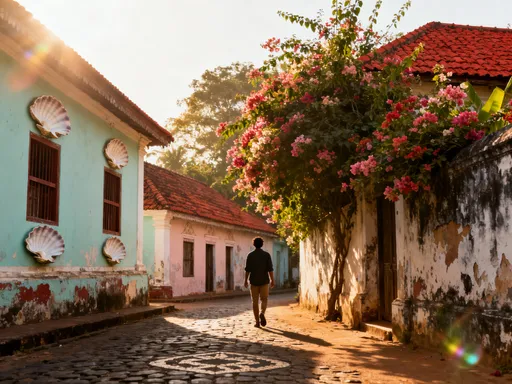
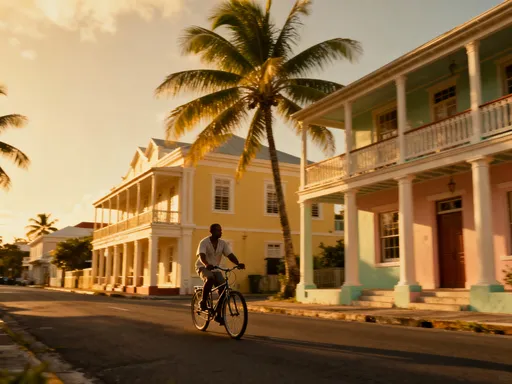
While the grand churches command attention, it is in the residential neighborhoods that Goa’s architectural soul truly breathes. In the Latin Quarter of Fontainhas, a maze of narrow lanes painted in ochre, mint green, and terracotta, one finds some of the best-preserved examples of Indo-Portuguese domestic architecture. These homes, built between the 18th and early 20th centuries, blend tropical practicality with European elegance. Their most distinctive feature is the balcão—a covered veranda with a low stone bench, often framed by wrought-iron railings. This was more than a decorative element; it served as a social space where families gathered, greeted neighbors, and observed street life while staying shaded from the sun.
Many houses feature oyster-shell windows, a unique adaptation to the coastal climate. Before glass became widely available, Goan craftsmen embedded translucent oyster shells into wooden frames, allowing diffused light to enter while maintaining privacy and ventilation. The red Mangalore tiles that crown the roofs are another hallmark, designed to withstand heavy monsoon rains while providing natural insulation. Interior courtyards, often centered around a well or a potted plant, promote airflow and create pockets of coolness in the humid heat.
In recent years, a growing number of these ancestral homes have been restored and converted into heritage homestays, cafes, and art galleries. Families who have lived in them for generations are finding new ways to preserve their legacy. One such example is a restored villa in Fontainhas that now operates as a boutique guesthouse. Its owners, descendants of a Goan-Portuguese lineage, retained original features like the central staircase with carved wooden banisters, the tiled flooring, and the kitchen’s traditional clay oven. At the same time, they introduced modern amenities discreetly, ensuring comfort without compromising authenticity. These adaptive reuse projects are vital—they keep the buildings alive, not as museum pieces, but as living spaces that continue to serve the community.
Temple Architecture Beyond the Coast
While much of Goa’s colonial architecture is concentrated along the coast, a different kind of beauty unfolds inland—where ancient Hindu temples rise from the forested hills and riverbanks. Far from the tourist hubs, places like the Mahadeva Temple at Tambdi Surla offer a glimpse into a spiritual and artistic tradition that predates Portuguese arrival. Built in the 12th century during the Kadamba dynasty, this small but exquisite temple is carved entirely from black basalt. Its pyramid-shaped shikhara (tower) and intricately sculpted doorframes reflect a fusion of Kadamba and Dravidian architectural styles, common in southern India.
What makes the Mahadeva Temple remarkable is its survival. Located deep within the Bhagwan Mahaveer Sanctuary, it escaped destruction during the colonial period, when many temples were razed or relocated. The temple’s layout follows the traditional panchaayatana style, with the main shrine dedicated to Lord Shiva and four smaller shrines at the corners. The mandapa (pillared hall) features finely carved lotus motifs, serpent deities, and scenes from Hindu epics. Despite centuries of exposure to tropical weather, the carvings remain remarkably detailed, a testament to the skill of the stonemasons who shaped them.
The contrast between coastal Christian architecture and inland Hindu temple design is striking. Where churches emphasize verticality, light, and ornamentation, temples are often grounded, introverted, and oriented toward inner contemplation. Yet both share a reverence for craftsmanship and symbolism. In both traditions, every element—from the placement of a doorway to the pattern of a tile—carries meaning. This duality reflects Goa’s layered identity: a place where multiple faiths, histories, and aesthetics coexist, sometimes in tension, often in harmony.
Everyday Design: Markets, Bridges, and Public Spaces
Goa’s architectural richness extends beyond monuments and homes into the fabric of daily life. The design of functional structures—markets, bridges, municipal buildings—reveals a deep understanding of climate, material, and community needs. Take the old bridges that cross Goa’s many rivers. Built during the Portuguese era, many are low-lying stone arch bridges designed to withstand seasonal flooding. Constructed from laterite and lime mortar, they blend seamlessly into the landscape, their curves echoing the flow of water beneath. Some, like the bridge at Chandor, remain in use today, a quiet testament to enduring engineering.
Local markets, too, reflect thoughtful design. The municipal market in Mapusa, for instance, features wide, sloped roofs made of corrugated metal or clay tiles, supported by wooden trusses. These roofs provide shade and allow hot air to rise, creating natural ventilation. Open-sided stalls encourage airflow and easy access, while raised platforms protect goods from monsoon runoff. The layout is organic rather than rigid, shaped by decades of foot traffic and vendor arrangements. There is no grand plan, yet the space functions with intuitive efficiency.
Even street furniture and public buildings incorporate climate-responsive features. Municipal offices often have high ceilings, ceiling fans, and cross-ventilation to reduce reliance on air conditioning. Laterite stone, used widely in construction, has natural thermal mass, absorbing heat during the day and releasing it slowly at night. Courtyards and verandas provide shaded transitional spaces, easing the shift from outdoor heat to indoor coolness. These design choices are not accidental; they are the result of generations of adaptation to Goa’s tropical monsoon climate. Tourists may overlook them, but they are essential to the comfort and sustainability of daily life.
Preservation vs. Modernization
As Goa continues to attract investment and tourism, the tension between preservation and development grows more pronounced. On one hand, there is a growing appreciation for heritage architecture, driven by both locals and visitors. On the other, real estate pressures and urban expansion threaten historic neighborhoods. In Panaji, some colonial-era homes have been demolished to make way for concrete apartment blocks, erasing irreplaceable pieces of the city’s character. The loss is not just aesthetic; it represents a disconnection from cultural memory.
Efforts to protect Goa’s architectural heritage are underway. Old Goa’s designation as a UNESCO World Heritage Site has helped safeguard its most important religious structures. Local NGOs, such as the Goa Heritage Action Group, advocate for stricter conservation laws and community-led preservation initiatives. In Fontainhas, heritage regulations now require property owners to maintain façade integrity when renovating, ensuring that new construction respects the historic streetscape.
One of the most promising trends is adaptive reuse—transforming old buildings into functional, modern spaces without losing their character. A former chapel in Assagao has been converted into a cultural center hosting art exhibitions and music performances. In Panaji, a colonial-era townhouse now operates as a café, its interior walls displaying archival photographs of old Goa. These projects demonstrate that preservation does not mean freezing buildings in time; it means allowing them to evolve while honoring their origins. When done thoughtfully, adaptive reuse can make heritage accessible, economically viable, and socially relevant.
Why This Matters for Travelers
For the thoughtful traveler, exploring Goa’s architecture offers a deeper, more meaningful experience than sunbathing or bar-hopping ever could. It invites a slower, more observant way of moving through the world—one that values context, history, and craftsmanship. When you stand beneath the vaulted ceiling of a 400-year-old church, or trace your fingers over a centuries-old stone carving, you are not just seeing a building; you are encountering layers of human experience. You begin to understand how faith, climate, politics, and artistry shape the spaces we inhabit.
To engage with this heritage respectfully, consider joining a guided heritage walk led by local experts. These tours often include access to private homes, temples, and lesser-known sites, providing insights that guidebooks cannot. Timing your visit to avoid peak heat—early mornings or late afternoons—allows for more comfortable exploration and better light for photography. When visiting religious sites, dress modestly and observe silence where requested. Most importantly, support preservation by staying in heritage homestays, dining at family-run eateries in historic buildings, and purchasing crafts from local artisans.
Slowing down is the greatest gift you can give yourself and the places you visit. Instead of rushing from one beach to the next, pause. Look up. Notice the curve of a staircase, the pattern of a tile, the way light filters through an oyster-shell window. Let the buildings speak. In doing so, you do more than sightsee—you connect. You become part of a continuing story, one shaped by time, resilience, and the quiet dignity of places built to endure.
Goa’s true soul lies not in its nightlife or shorelines, but in the quiet dignity of its structures—each archway, step, and shutter whispering centuries of change. By choosing to explore its architecture, travelers gain more than photos; they gain perspective. In a world rushing toward the new, Goa reminds us to pause and honor what time has shaped. Let your next journey be one of seeing—really seeing—what’s been built to last.