Why Chefchaouen’s Blue Streets Feel Like Stepping Into a Dream
Nestled in Morocco’s Rif Mountains, Chefchaouen isn’t just painted blue—it breathes blue. From the moment I arrived, every alley, doorway, and staircase felt like part of a living canvas. This isn’t just about color; it’s about culture, history, and the quiet magic of a town that sees the world differently. The viewing experience here goes beyond sight—it shapes how you feel, think, and remember. Walking through Chefchaouen is like stepping into a dream where time slows, light softens, and every turn reveals a new shade of serenity. The blue walls don’t merely catch the eye—they invite introspection, connection, and wonder. For travelers seeking more than postcard moments, this town offers a rare gift: the chance to see the world through a different lens.
The First Glimpse: Arrival in Chefchaouen
Reaching Chefchaouen is an experience shaped by journey and elevation. As visitors wind through the Rif Mountains along narrow roads flanked by olive groves and wild thyme, the air grows cooler and the pace of life visibly slows. The city appears gradually, almost like a mirage—first a cluster of pale blue rooftops nestled in a valley, then an expanding patchwork of azure hues cascading down the hillside. This slow reveal is no accident; the town’s location was chosen deliberately centuries ago for both defense and climate, and today it enhances the emotional impact of arrival. Unlike cities that burst into view, Chefchaouen unfolds with quiet dignity, preparing the visitor for a different kind of encounter.
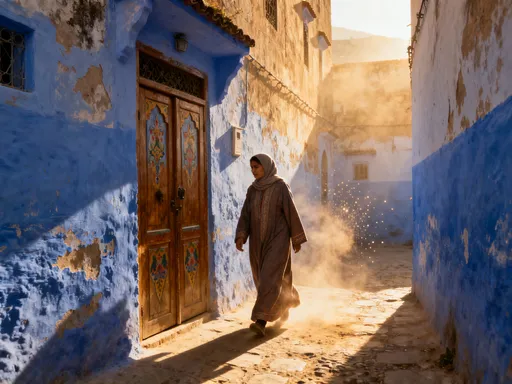
The first steps into the medina, the historic heart of the town, are often met with a sense of awe. The blue deepens as you move inward—cobalt, sky, powder, indigo—each tone reflecting the changing light of day. Morning casts a silvery glow, midday brings out vibrant contrasts, and late afternoon bathes the streets in a golden-blue harmony. This visual rhythm is amplified by the town’s terraced layout, where staircases and sloping alleys create natural frames for each new vista. There are no grand plazas or sweeping boulevards here; instead, intimacy defines the experience. Every corner promises a new perspective, and the sense of discovery is immediate and continuous.
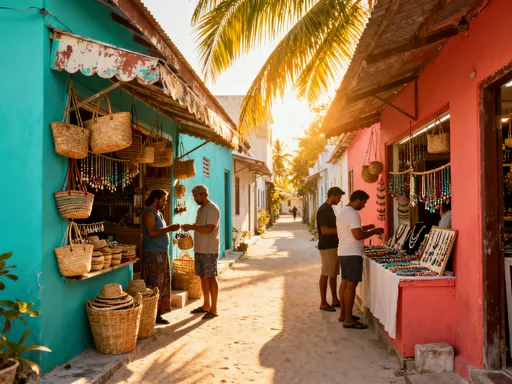
Equally important is the warmth of the welcome. Locals, many dressed in traditional djellabas or simple cotton garments, greet passersby with quiet smiles or soft salutations. Children call out “Bonjour!” with cheerful curiosity, while shopkeepers offer mint tea without expectation. These small gestures set the tone for a visit grounded in respect and humanity. There is no aggressive tourism infrastructure—no loud vendors or crowded touts. Instead, visitors are gently absorbed into the daily rhythm of life. This atmosphere of calm hospitality enhances the dreamlike quality of the place, making it feel less like a destination and more like a temporary home.
The Meaning Behind the Blue: Culture in Color
The blue that defines Chefchaouen is not a recent aesthetic choice or a marketing strategy. Its origins trace back to the 15th century, when Jewish refugees fleeing persecution in Spain settled in the town and began painting their homes in blue as an expression of faith and identity. In Jewish tradition, the color blue symbolizes the divine presence, a reminder of the sky and the sea—boundless and eternal. The dye originally came from natural sources, including crushed minerals and plant extracts, and over time, the practice spread beyond the Jewish community, becoming a shared cultural language.
While the spiritual significance remains important, other practical and environmental factors have reinforced the tradition. The blue pigment, particularly in its lighter shades, reflects sunlight and helps keep homes cooler in the summer months. In a region where temperatures can rise sharply, this natural cooling effect makes daily life more comfortable. Lime-based paints are commonly used, which not only provide a smooth, luminous finish but also have antiseptic properties that help repel insects—a subtle yet valuable benefit in a mountain climate.
More than function or symbolism, the color has become a communal act of identity. Families repaint their homes regularly, often during spring or after religious holidays, treating the ritual as both maintenance and celebration. The shade varies from house to house—some opt for bold cobalt, others for soft pastels—creating a mosaic that feels unified yet deeply personal. This is not a curated experience for tourists; it is a living tradition, passed from generation to generation. When visitors admire the blue walls, they are not seeing a performance—they are witnessing a way of life that values harmony, memory, and beauty as essential elements of daily existence.
Walking the Wadis: A Sensory Journey Through the Medina
Exploring the medina of Chefchaouen is an exercise in sensory immersion. The narrow streets, often no wider than a few feet, wind like threads through the fabric of the town. Sunlight filters down at sharp angles, creating shifting patterns of light and shadow that dance across the walls. The air carries a blend of scents—freshly baked msemen, the earthy aroma of cedarwood, and the faint tang of drying paint. Every sense is gently engaged, drawing the visitor deeper into the rhythm of the place.
Architectural details reveal themselves slowly. Doorways are framed with intricate stucco work, some painted with floral motifs, others adorned with simple geometric lines. Staircases curve around corners, their steps worn smooth by centuries of foot traffic. Balconies overflow with geraniums in terracotta pots, their red blooms creating vivid contrasts against the blue. Hidden courtyards open unexpectedly, offering glimpses of quiet family life—women kneading dough, elders sipping tea, cats napping in sunlit corners. These moments are not staged; they are the unscripted poetry of daily existence.
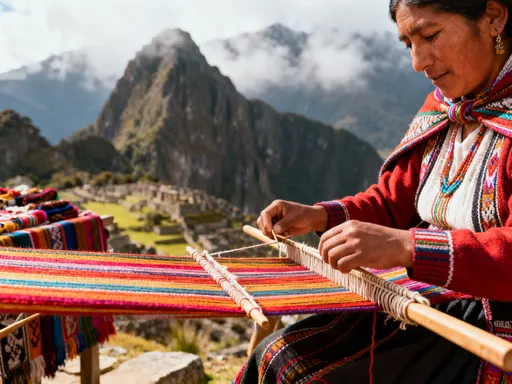
Artisans play a central role in the medina’s character. Small workshops line the alleys, where weavers create hand-loomed blankets in vibrant stripes, potters shape clay into tagines, and metalworkers engrave brass lanterns with delicate patterns. These crafts are not produced solely for tourists; they are part of a living economy rooted in tradition. Visitors are often invited to watch or even try their hand at simple techniques, creating moments of connection that go beyond transaction. A weaver might explain how her mother taught her the rhythm of the loom, or a potter might demonstrate how the local clay fires differently in the mountain air. These interactions enrich the viewing experience, transforming sight into understanding.
Even the act of getting lost becomes a form of discovery. Without a rigid grid, navigation requires attention and patience. A wrong turn might lead to a secluded fountain, a quiet prayer niche, or a view over the valley. There is no urgency here—no need to check a watch or follow a strict itinerary. Time unfolds differently in Chefchaouen, measured not in minutes but in moments of beauty, connection, and stillness. This unhurried pace allows the visitor to truly see, not just look.
Eyes of the Locals: How Residents See Their Own City
To walk through Chefchaouen as a local is to move through a world of routine and familiarity. For residents, the blue walls are not a spectacle—they are the backdrop of life. Children play hopscotch on blue-painted steps, their laughter echoing off the walls. Women hang laundry on lines strung between houses, the white sheets fluttering like sails against the azure. Men gather in shaded corners to discuss the day’s news or play a slow game of dominoes. These scenes repeat daily, forming a rhythm as steady as the mountain seasons.
Yet familiarity does not erase pride. Many locals speak of their town with quiet affection, describing it as peaceful, protected, and deeply rooted. The act of painting is not merely maintenance—it is an expression of care. Families often repaint together, treating it as a seasonal ritual that strengthens bonds. Elders pass down knowledge about the right mix of lime and pigment, while younger generations add their own touches, blending tradition with personal style. This continuity is a source of quiet strength, a way of honoring ancestors while shaping the present.
There is also an awareness of how outsiders see the town. Some residents appreciate the attention, noting that tourism has brought economic opportunity and global recognition. Others express concern about overcrowding, especially during peak seasons when narrow alleys become congested. A shopkeeper might politely remind a visitor not to block a doorway for a photo, or a homeowner might request privacy when repainting a family home. These moments reflect a desire to balance openness with respect—a recognition that while the town welcomes guests, it must remain first and foremost a home.
The contrast between tourist fascination and local normalcy is not a conflict, but a quiet dialogue. Visitors come seeking beauty and inspiration; residents live within it, shaping it daily. This duality is part of what makes Chefchaouen so compelling. It does not perform authenticity—it simply is. And in that honesty, it offers a rare kind of truth: that beauty can be both extraordinary and ordinary at once.
Framing the View: Photography and Perception
Chefchaouen is undeniably photogenic. Its blue walls, dramatic lighting, and picturesque details make it a favorite among photographers and casual travelers alike. It is common to see visitors pausing at every turn, adjusting angles, and waiting for the perfect light. Social media is filled with images of blue doorways, cats on steps, and panoramic views from the Spanish Mosque. These photos capture undeniable beauty, but they also risk reducing the town to a series of visual clichés.
There is value in stepping back—sometimes literally—from the lens. Moments of deeper connection often happen when the camera is put away. A conversation with a weaver, the taste of warm bread from a neighborhood oven, the sound of call to prayer echoing through the hills—these experiences cannot be framed but are often the most memorable. Photography can enhance perception, but it should not replace it. The danger lies in seeing only what can be captured, rather than what can be felt.
This is not to discourage photography, but to encourage intention. Capturing the essence of Chefchaouen means looking beyond symmetry and color harmony. It means photographing the hands of an artisan, the quiet dignity of an elder, the joy of children playing in an alley. It means respecting privacy, asking permission when entering homes or photographing people, and avoiding poses that turn life into performance. Responsible photography honors the humanity behind the beauty.
Over-tourism is a growing concern. While tourism supports local livelihoods, an influx of visitors can strain infrastructure and disrupt daily life. Some alleys, once quiet, now echo with the chatter of guided groups. Certain spots become congested as everyone seeks the same iconic shot. Sustainable travel practices—visiting in shoulder seasons, supporting local businesses, minimizing waste—help preserve the town’s character. True appreciation means leaving as lightly as possible, ensuring that future generations can also experience its magic.
Beyond the Blue: Other Layers of Cultural Sight
While blue dominates the visual landscape, Chefchaouen’s cultural richness extends far beyond its walls. The town is a repository of Moroccan craftsmanship and tradition, expressed in textures, patterns, and daily rituals. In the souks, handwoven rugs display intricate Berber designs—diamonds, zigzags, and symbols passed down through generations. Each pattern tells a story, whether of protection, fertility, or tribal identity. These textiles are not decorative; they are woven records of history and belief.
Market displays offer another layer of visual culture. Stalls overflow with saffron, cumin, and paprika in vibrant mounds. Fresh produce—purple eggplants, green zucchinis, red peppers—is arranged with care, creating natural still lifes. Vendors wrap herbs in newspaper with practiced precision, their movements a quiet dance of routine and skill. Food itself becomes art, not in presentation for cameras, but in the dignity of daily provision.
Calligraphy appears subtly on walls and doorways—verses from the Quran or blessings written in flowing Arabic script. These inscriptions are not for tourists; they are acts of faith and protection, integrated into the fabric of the town. Similarly, the design of homes—courtyards centered around fountains, windows with carved wood lattices—reflects Islamic architectural principles of privacy, harmony, and connection to nature. These elements are not displayed; they are lived.
Even the way people dress contributes to the visual tapestry. Women in colorful kaftans move through the streets, their garments echoing the hues of market spices. Men in white or brown djellabas blend into the stone and plaster. These choices are not about fashion but identity, comfort, and tradition. Together, these details form a cultural mosaic that deepens the experience of seeing—not as a spectator, but as a witness to a way of life.
The Last Look: Leaving with a Changed Gaze
Departing Chefchaouen is not an abrupt end, but a gradual release. The blue lingers in memory, not as a color, but as a feeling—a sense of calm, clarity, and connection. Long after the journey ends, visitors often find themselves noticing details they once overlooked: the way light falls on a wall, the quiet beauty of a routine moment, the power of color to shape emotion. The town does not just leave an impression; it alters perception.
This transformation is the true gift of culturally rooted travel. In a world increasingly dominated by speed and spectacle, Chefchaouen offers a different model—one where beauty is lived, not consumed. It reminds us that places can teach as much as people, that tradition can be both gentle and profound, and that seeing deeply is a form of respect. The blue streets are not an escape from reality, but a return to a more attentive way of being.
Carrying this gaze forward means applying the same mindfulness elsewhere. A city sidewalk, a suburban backyard, a rainy afternoon—each can be seen with new eyes. The lesson of Chefchaouen is not to seek constant wonder, but to recognize it in the ordinary. True viewing is not passive; it is an act of engagement, curiosity, and gratitude. And in that awareness, the dream does not end—it continues, quietly, in everyday life.
Chefchaouen doesn’t just offer sights—it reshapes sight itself. Its blue walls are more than paint; they’re a testament to how culture can shape perception. In a world rushing toward the new, this mountain town quietly reminds us to look deeper, feel fully, and carry meaning home.